
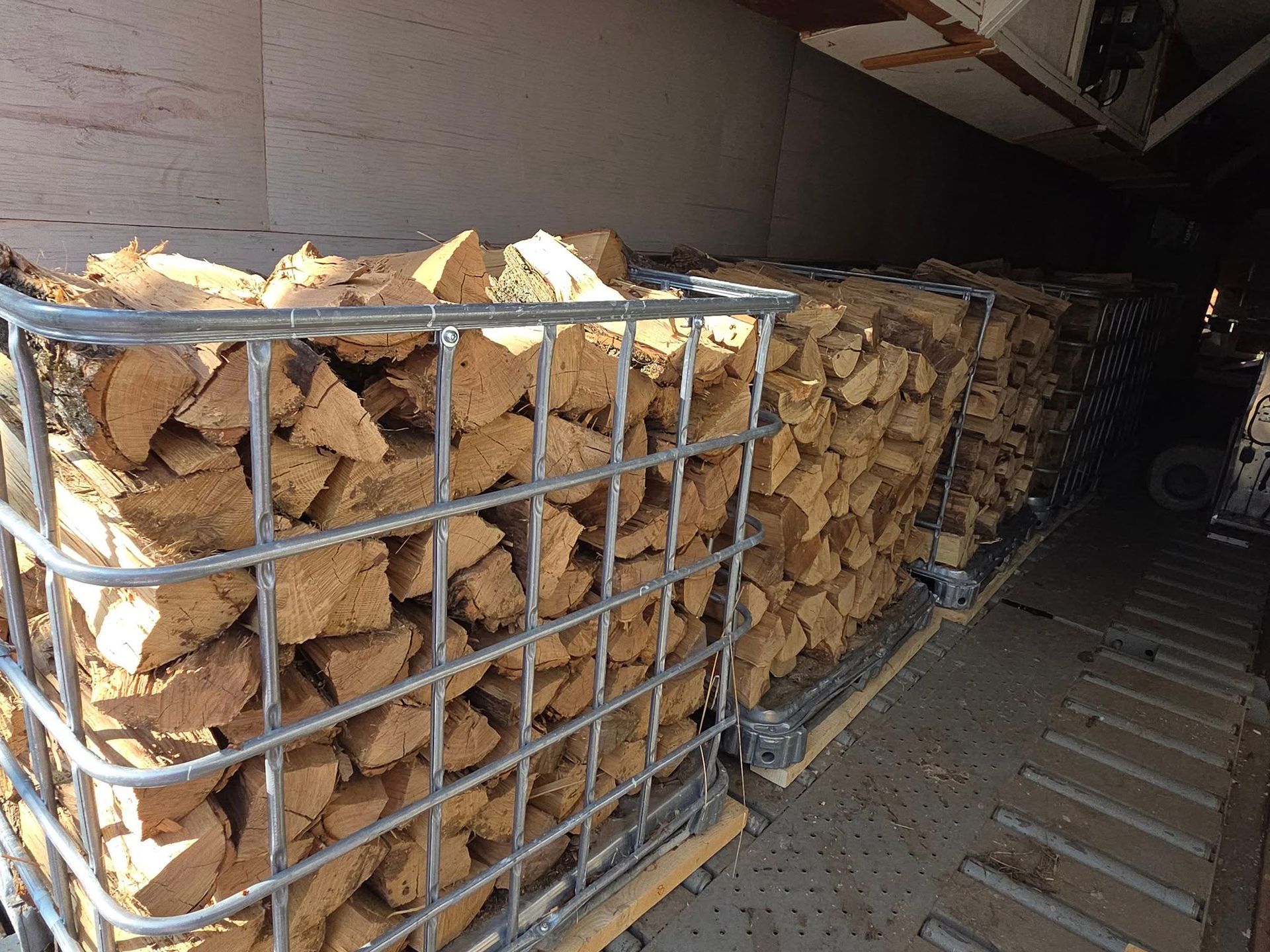
Turn Fresh-Cut Lumber Into Stable, Workable Wood
Kiln drying services in Potterville give your milled lumber the controlled treatment it needs to become furniture-ready material.
When you mill lumber from trees on your property in Potterville, the boards come off the sawmill wet, heavy, and full of moisture that will cause problems if you try to use them too soon. You need a way to bring that moisture content down without the cracking, cupping, or twisting that happens when wood dries unevenly in a barn or garage. Cole's Tree Care and Sawmill LLC offers kiln drying that takes freshly sawn boards and processes them in a controlled environment where temperature and humidity are managed to pull moisture out gradually and uniformly.
Kiln drying uses heat and airflow to remove water trapped inside wood cells at a rate that prevents surface checking and internal stress. Drying time depends on the species you are working with and how thick the boards are, so softer woods with thinner profiles dry faster than dense hardwoods cut to full dimension. The process lowers moisture content to a level that makes the wood dimensionally stable, so it will not shrink or warp after you build with it. This service is ideal for anyone planning woodworking projects, furniture builds, or custom installations where consistency and durability matter.
If you have milled lumber waiting to be dried in Potterville, reach out to discuss scheduling and timing based on what you are working with.
Why Controlled Drying Protects Your Investment
Air drying works in some situations, but it takes months or even years depending on thickness, and you have no control over how the wood responds to outdoor humidity swings in Potterville. Kiln drying compresses that timeline and gives you predictable results because the environment inside the kiln is monitored and adjusted throughout the cycle. Boards are stacked with spacers called stickers to allow air to circulate between each layer, and fans move heated air through the stack to pull moisture out evenly from all surfaces.
Once the cycle finishes, your boards will feel lighter, the ends will no longer be damp to the touch, and the wood will hold its shape when you rip it, plane it, or join it into assemblies. Cole's Tree Care and Sawmill LLC schedules kiln drying as a service that fits into the full cycle from tree removal to finished material, so you can complete the entire process locally without hauling green lumber to a distant facility. Each load is handled according to the species and dimensions you provide, and drying is timed to avoid rushing boards out before they reach the target moisture range.
The service does not include planing, jointing, or finish work after drying, so you will still need to surface the boards and prepare them for your specific project. Kiln drying also does not repair defects that were already present in the wood, such as knots, splits, or mineral streaks, but it does prevent new damage from forming as the moisture leaves.
Questions about timing and wood types come up often.
People who have never dried their own lumber often wonder how long it takes, whether their species will work, and what condition the boards will be in when the process is finished.
What types of wood can be kiln dried? You can dry most species that are commonly milled for lumber, including oak, maple, cherry, ash, and walnut, as well as softer species like pine and poplar.
How long does kiln drying take? Drying time varies depending on species and thickness, with thinner boards and softer woods drying faster than thick hardwood slabs that may take several weeks.
Why does moisture content matter for woodworking? Wood continues to expand and contract with changes in humidity, so if you build with lumber that is still too wet, joints will loosen and panels will crack as the material loses more moisture indoors.
What will the boards look like after drying? The surface may show some color change or end checking depending on the species, but the overall dimensions will be stable and the wood will be ready for planing and milling.
When should I schedule kiln drying after milling? You should schedule drying as soon as the lumber is stacked and stickered, since delays can lead to mold, staining, or uneven moisture loss in Potterville's variable climate.
If you are ready to move your milled lumber through the drying stage and make it ready for your next build, contact Cole's Tree Care and Sawmill LLC to arrange a kiln drying schedule that works with your project timeline.